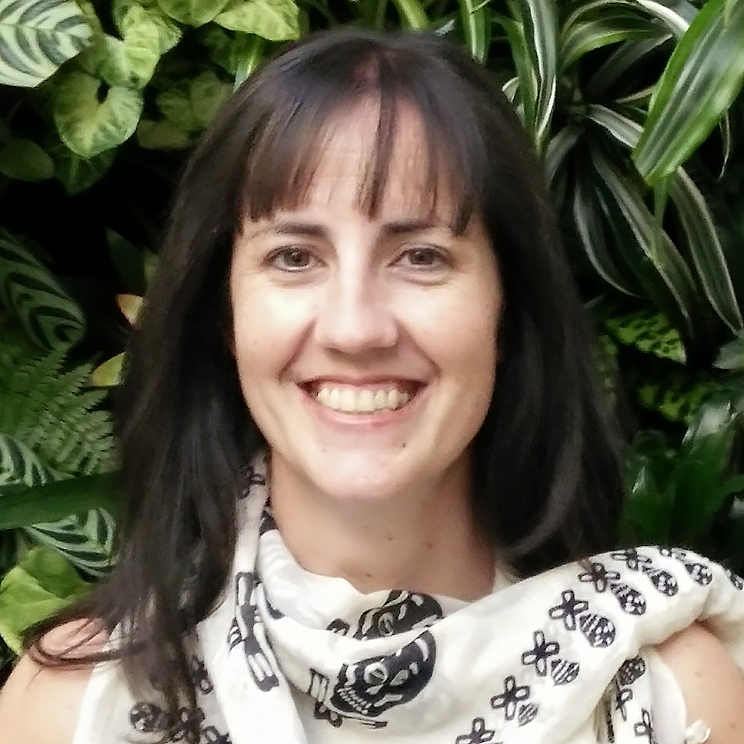
This will be me in just 23 days… so excited to marry the love of my life! Click the photo to see the full images of this beautiful wedding…
Having two z’s in one’s name is nothing like Scrabble where they bring high value. They limited my creativity in rhyming as a child for one, and Zil Ociznad, my attempted secret nickname, was all but foiled by the odd z-angles. (Say it out loud, you’ll see.) But letters and, at a larger scale, language give form. We use them to be explicit, and at the next turn, to soften concepts.
We try to be just; we do have hope, and therefore, just and hope, as vocabulary terms, crop up in our nomenclature more often than you might realize.
On just
It’s just a prototype.
It’s just a first draft.
I just put it together quickly.
I’m just sitting in; don’t mind me.
Just go on without me.
I just want to tell you one more thing.Suddenly we’ve dismissed the sentence. One word has the ability to undermine the power of what could have been an otherwise powerful statement. Paul Rand points out, “The vocabulary of a language of art … this is the language of form.” Of course he was speaking of the aesthetics of visual form and scope of graphic design, but when we speak, we too give form with our word choice, undermining it with “just.” All the while, we hope for impact.
On hope
See also:
There are always exceptions, and Paul Rand (quoting Mies van der Rohe) can get away with one: “Don’t try to be original. Just try to be good.”Hope is enjoying a rise in popularity, but we seem to be spending it unwisely. “Hope that helps.” “Hope you enjoyed it.” “Hope that made sense.” As a closing line in a client presentation, as an email closing, or — worse — a closing for a talk when we’re on stage, it seems only natural that we would hope we’re imparting knowledge. But to the audience, “hope” is “just’s” counterpart. We’ve just delivered information, then followed it with a question mark — “hope that helps?” The audience is left to wonder, did it?
Be definitive. You can be more just with less “just” and leave more hope with less “hope-that-helps.”
I like this sentiment a lot - as someone who always thinks that ‘but’ negates whatever preceded it, I’ll be trying to minimise use of ‘just’ and ‘hope’ for similar reasons as Liz.
(44 days to go! hooray!)
this is me, trying to make a heart shape with a sparkler before the clock struck for the new year. i am certain that the fact that i celebrated the start of a new one with so many dear people will be auspicious for good things. (via darren131)
thousands of recycled keyboard keys are embedded into a continuous textile. The keys spell out a line-by-line transcript of the email correspondence between the artist and fabricators regarding the creation of the artwork. As a result, the sculpture documents its own making. Viewers can also type their own messages on the active keys amid the first three rows of emails. These new messages are then projected onto the opposite end of the fabric, thereby continuing the virtual dialogue. The project speaks to the pervasiveness of email in our lives while commenting on the fact that, despite the modern technology of virtual communication, our written language is linked to the tactile sensation of moving our fingers over an outmoded typewriter system.
um, that’s crazy….
“ What matters is not the perception, nor the fashion, not who’s up and who’s down, but what someone has done and if they meant it. ”
A single line from a terrific email response by author Dave Eggers regarding creativity, criticism, selling out and “the unshakable need to reduce”. You’ll be glad you read this. (via Wilson Miner) (via matthewb)
“ This is what we do, humans. We tinker, and change, and endlessly imagine a more perfect future. And at the same time, we idealize the past. So we’re trapped. Progress’s constant companion is nostalgia for the way things used to be. … The thing we forget about progress: there is no master plan. It lurches forward, in the dark, accidentally, and you’re never sure where it’s taking you. There’s no going back, whether it wants to or not. ”
Ira Glass (speaking about factory farms) from s1e6 of This American Life, the television show (via spaceminer).
in this we have to remember to see opportunity so we don’t get stuck in time like a kid whose face really did change with the wind.